



Lighting Signage That Has to Work From the Road Koala Self Storage, O'Connor
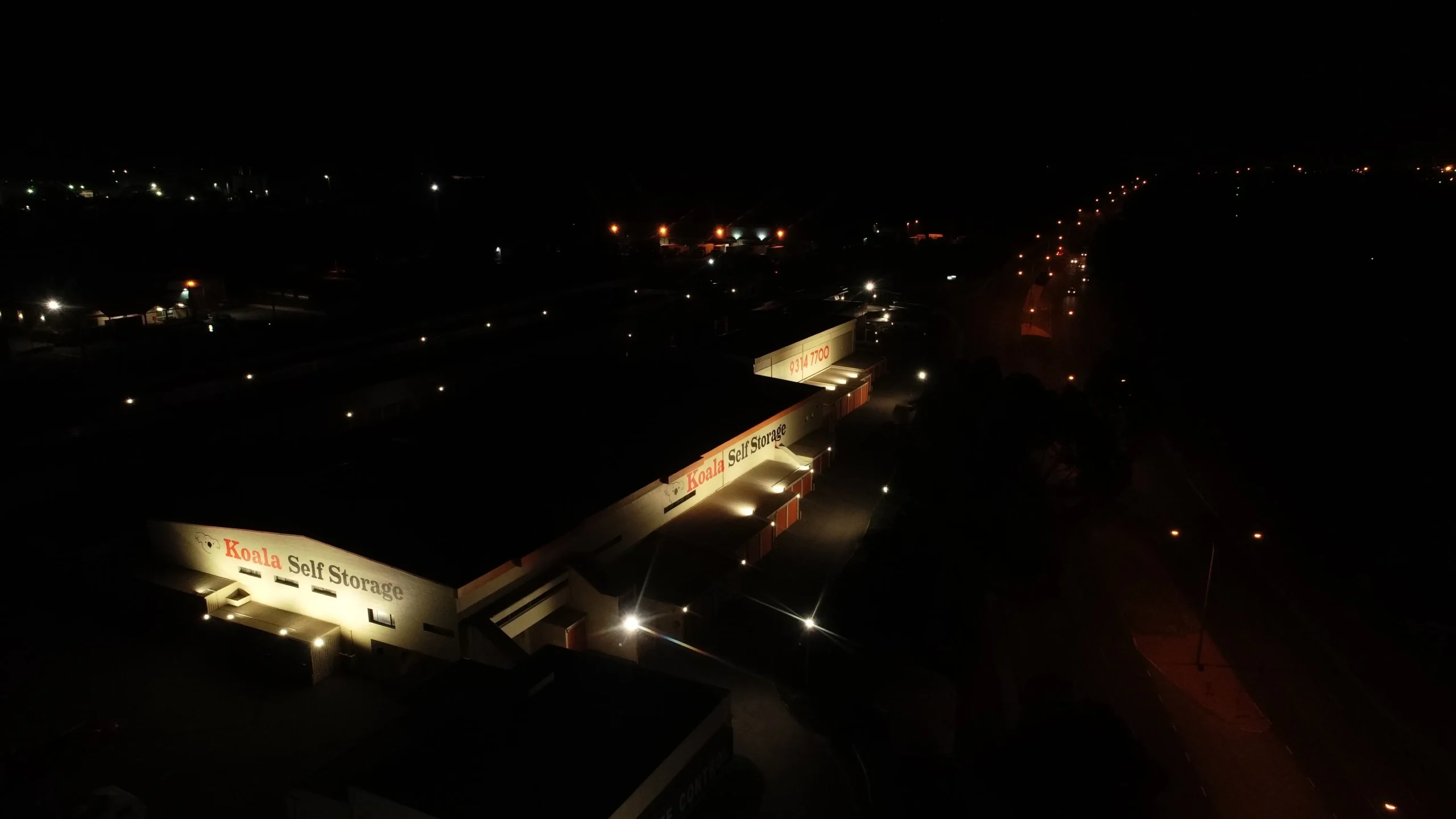
Koala Self Storage had new signage on Leach Highway and lighting that was not showing it off. We redesigned it with asymmetric LED floodlights, custom cowls to keep glare off passing traffic, and timers to keep it economical.

Koala Self Storage sits on Leach Highway in O’Connor. A lot of traffic goes past the front of it every day, and a good share of it goes past in the dark. The business had put up new signage across the frontage, and signage that size is not a decoration. It is the thing that tells a driver, in the time it takes to drive past, that there is a storage facility here and what its phone number is.
The problem was that after sunset it was not really doing that job.
They asked us to redesign the lighting so the signage actually performed at night. That is a different brief to “put some lights on it”, and it is worth explaining why.
What we walked into
There was already lighting on the frontage. That is usually the case. Very few businesses have no light on their sign at all. What they have instead is light that is not going where it needs to go.
You can see it in the before photos. Bright, hard points of light. Big starbursts. Hot spots on some sections of wall and dark gaps on others. Plenty of light in the general vicinity of the signage, and not much of it landing evenly on the letters.
Three things were going wrong, and they are the same three things we see on most commercial frontages.
- The light was aimed at the viewer, not at the wall. Standard floodlights throw a symmetrical cone straight out in front of them. Mount one at the base of a wall, or on a pole out in front of it, and a large part of that cone sails straight past the building and off into the distance. Some of it goes up into the sky. Some of it goes across the highway and into the windscreen of an oncoming driver. None of that light is doing anything for the sign.
- Bright is not the same as readable. Your eyes adapt to the brightest thing in the scene. If a sign has a hot spot in the middle and dark ends, the eye sets itself to the hot spot and the ends read as black. A sign lit evenly at a moderate level is far easier to read at speed than a sign that is brilliant in one place and dim in another. Uniformity does more for legibility than raw output does.
- Glare works against you twice. Light reaching a driver’s eye directly is light that is not on the sign, so you have paid for it and got nothing. Worse, it reduces contrast for that driver at the exact moment you want them reading your name. A glary frontage does not look impressive from the road. It looks like a light you cannot look at, next to a sign you cannot read.
What we did
Asymmetric floodlights. This is the core of it. An asymmetric optic does not throw a cone. It pushes light sideways and upward, away from the fitting, so a unit mounted low and close to the wall can wash the full height of the sign evenly from underneath. The light goes onto the surface instead of past it. It also means the fitting is doing useful work at a much lower output than a symmetrical unit would need, because almost all of what it produces is landing on the target.
Getting them positioned takes some care. Too close to the wall and you get a scalloped pattern, bright at the bottom and falling away at the top. Too far out and you are back to spilling light past the building. Spacing between fittings is what determines whether the wash is continuous or comes out as a row of arches. It is worth walking the frontage in the dark and looking at it from where the customer will actually be, which for this job meant looking at it from the highway, not from the car park.
Custom cowls on the roadside fittings. The fittings closest to Leach Highway needed more than good optics. We made cowls for them, essentially a shroud that blocks the fitting’s output above and beyond a set angle. Passing traffic sees the lit wall and does not see the light source. The cowls were made to suit these fittings in these positions, because a generic shield either does not fit or cuts into the beam you actually want.
This is the part most people skip, and it is the part that changes how a frontage reads from a moving car.
Timers. There is no reason for signage lighting to be running at three in the morning at full noise, or for it to be running at ten past six on a January evening when it is still broad daylight. We fitted new timer control so the lighting comes on and goes off when it should. Fewer hours of operation means lower running costs and longer service life out of the fittings, and it is the easiest saving available on any external lighting installation.
The combination is what does the work. New fittings on their own would have left the aiming problem exactly where it was. Better aiming on its own would have left the running hours where they were.
The result
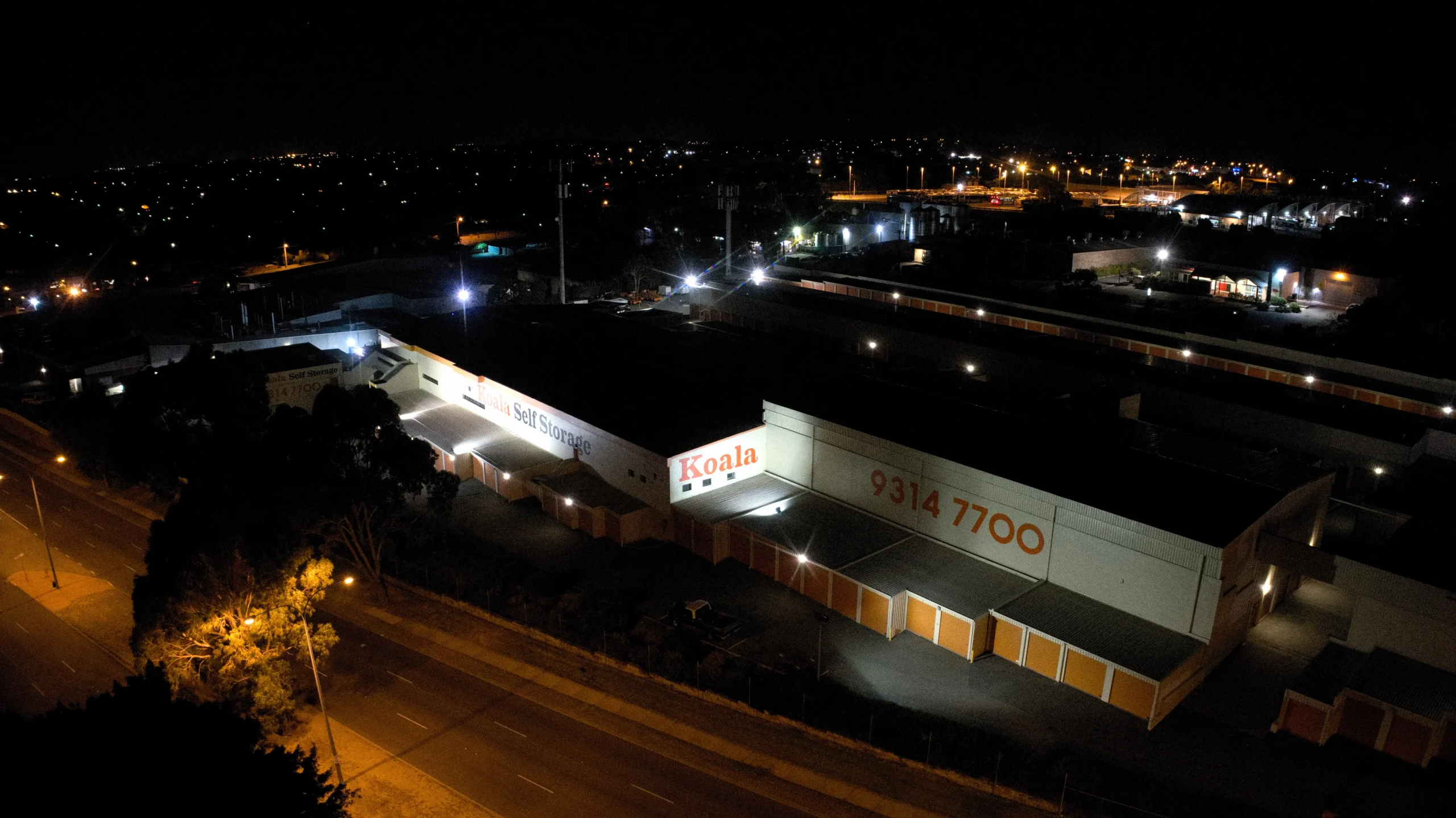
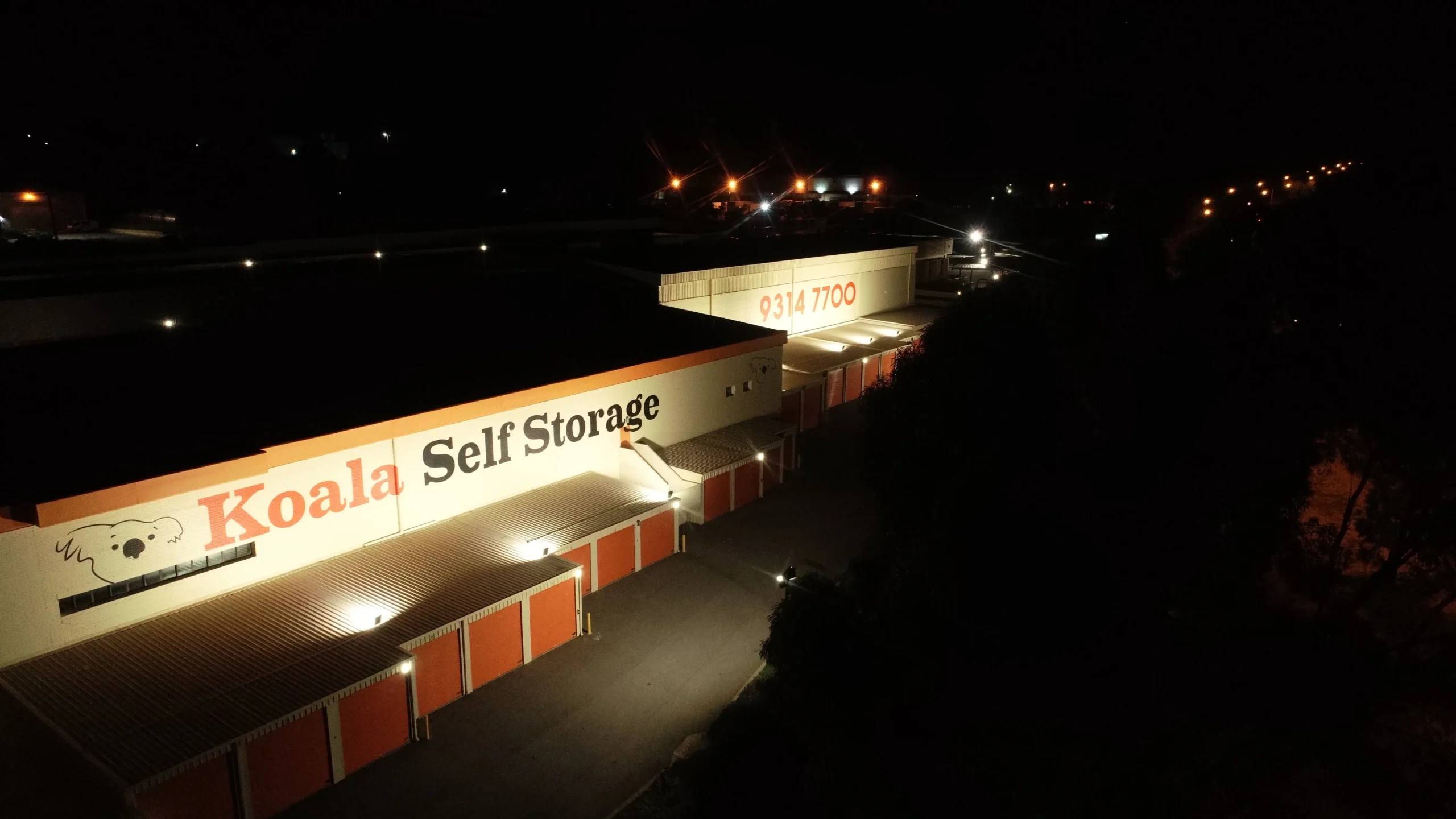
The before and after photos are the honest version of this. The signage is now lit continuously across its full length, top to bottom, with the lettering and the phone number legible from the road. The light stops at the building. Look at the road surface in the after shots and it is dark, which is the point. Nothing is being thrown at traffic and nothing is being thrown at the sky.
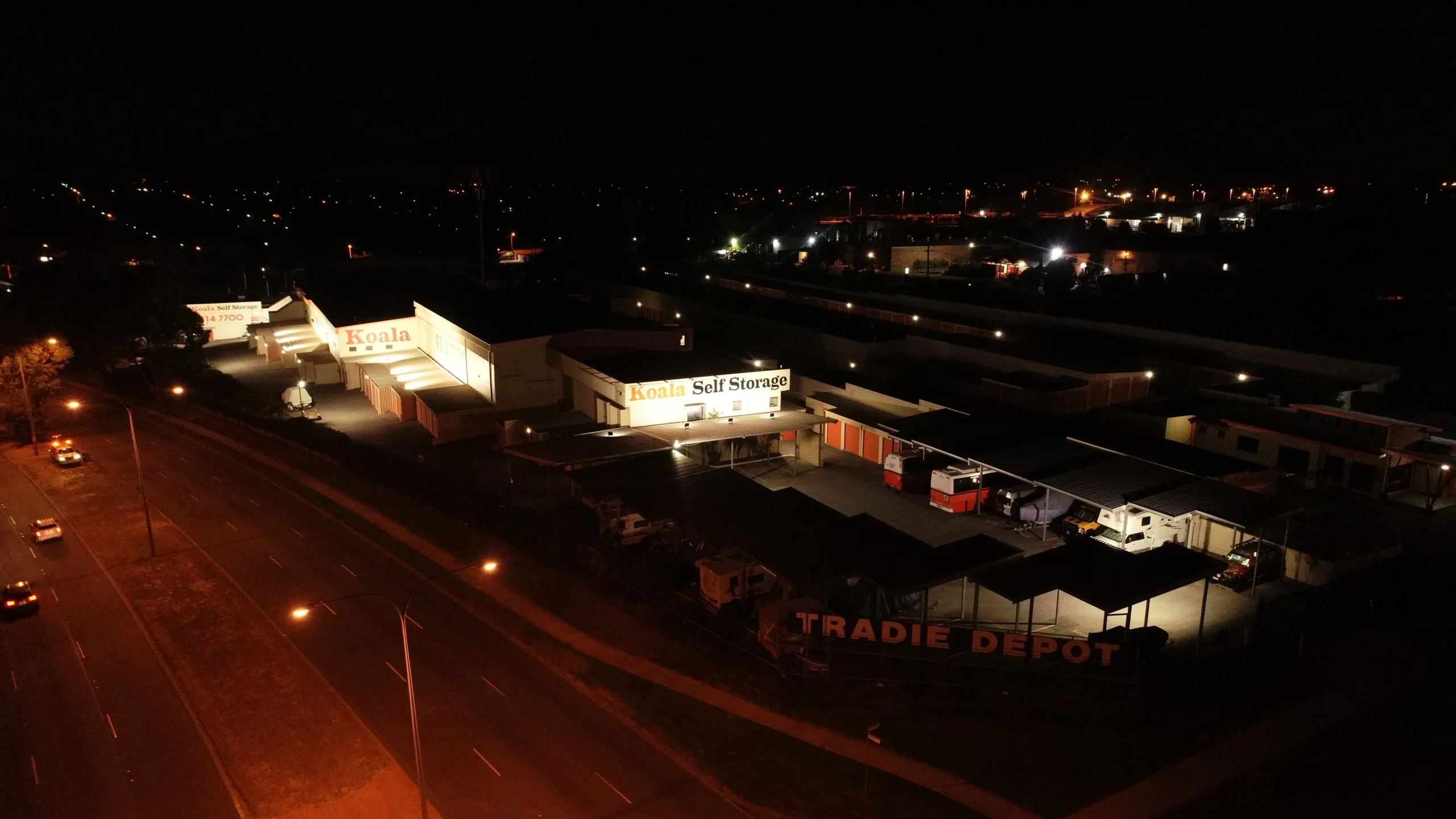
Before
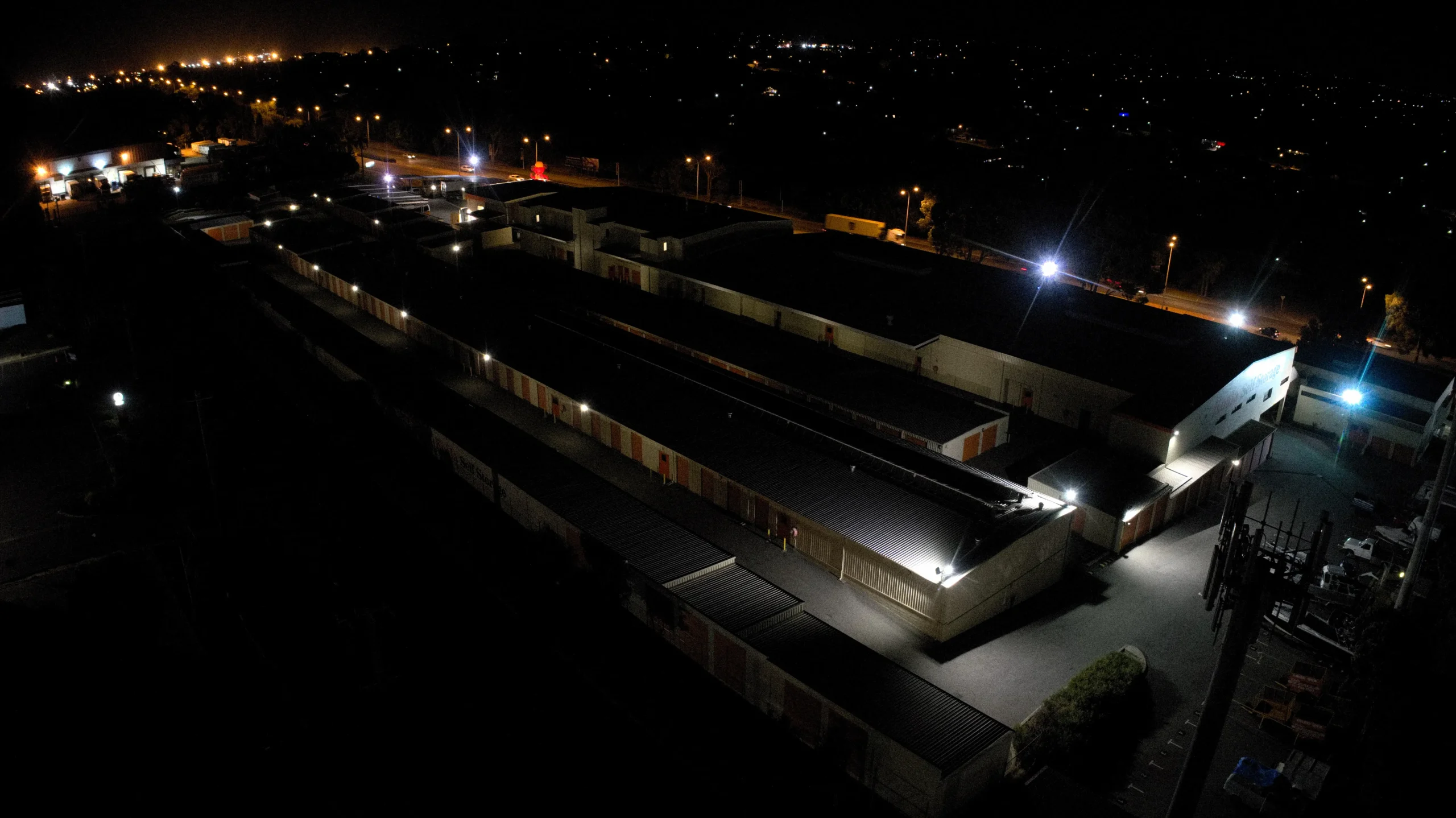
After
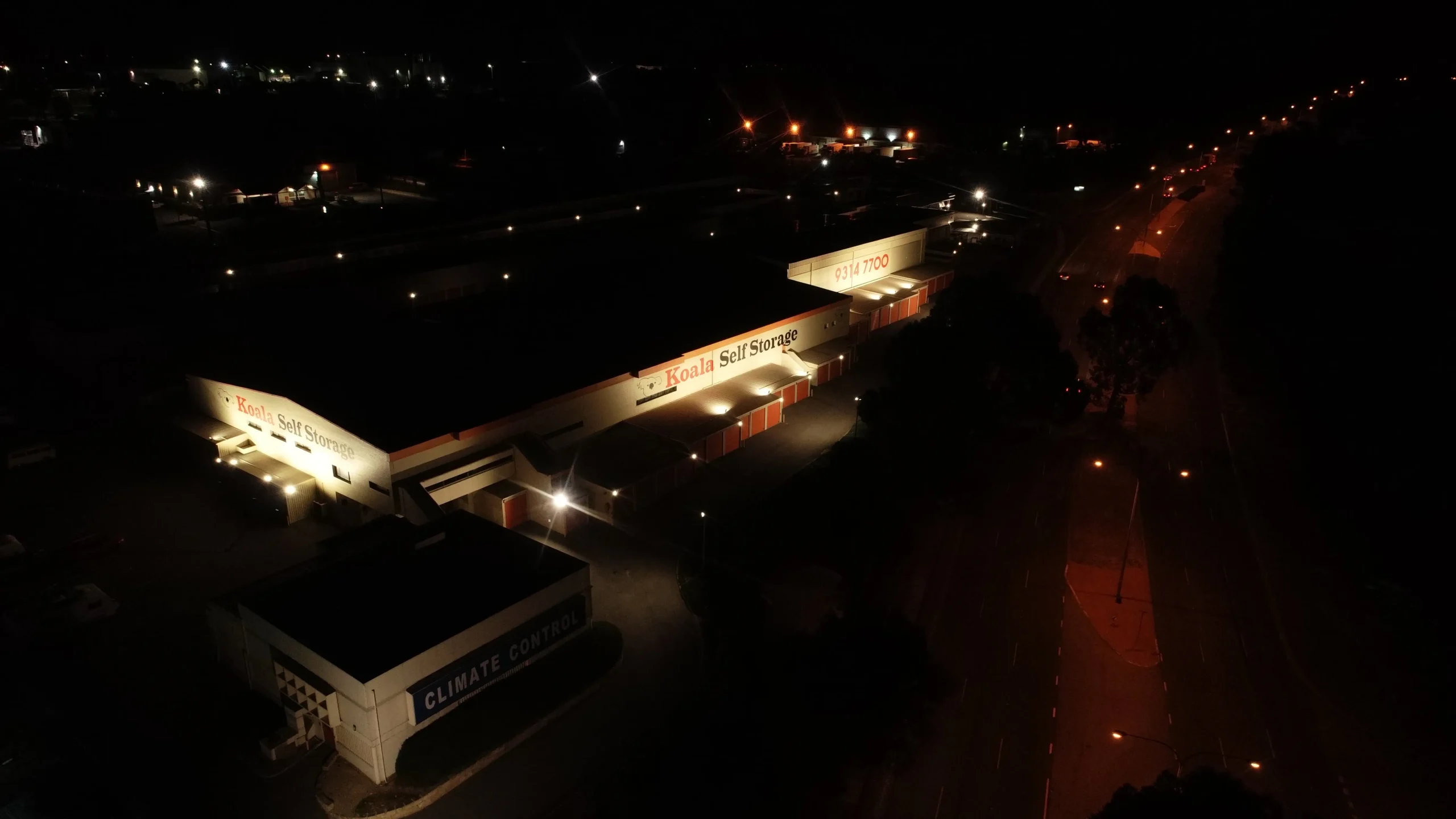
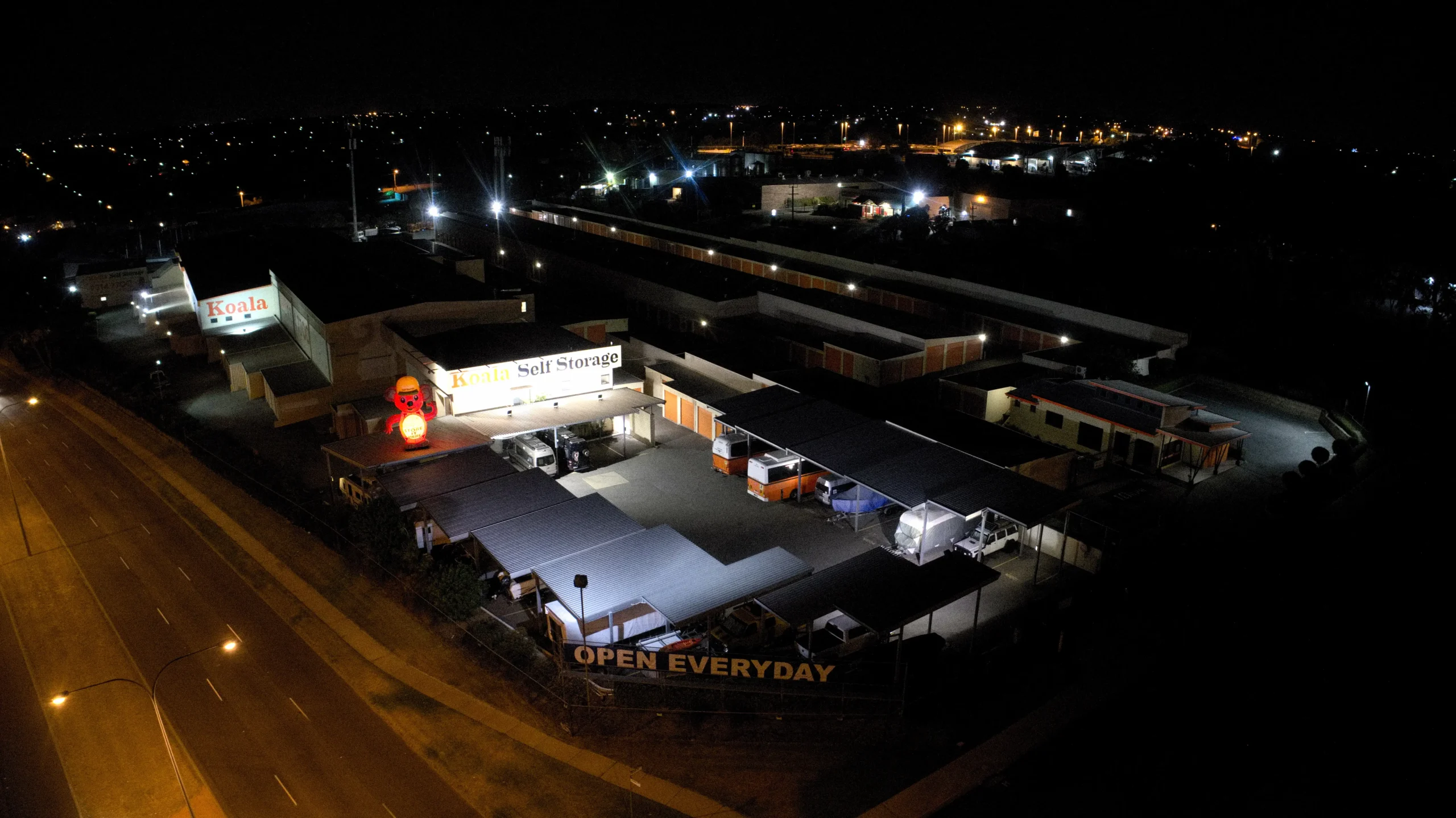
The same site from above. Both signage faces lit, and the highway left alone.
What to take from it if you have a signed frontage
- Your sign is only earning its keep while somebody can read it. If the business trades into the evening, or the frontage is on a road people use after dark, the lighting is not a finishing touch on the signage. It is half of it.
- Ask about the optics, not just the fitting. “LED floodlight” describes almost nothing. A symmetrical unit and an asymmetric unit of the same wattage will produce completely different results on a wall, and the asymmetric one will usually do the job with less power. The optic is the decision that matters.
- Even beats bright. If you are being sold more lumens as the answer to a sign that is hard to read, the answer is probably placement and spread instead. More output aimed at the wrong place gives you a brighter version of the same problem.
- Consider the driver. Light spilling onto a road is worth avoiding on its own merits, and there is an Australian standard covering the obtrusive effects of outdoor lighting, AS/NZS 4282, that deals with exactly this. Where a sign faces a Main Roads controlled route, there can also be conditions on illuminated signage. Worth checking before you install rather than after somebody complains.
- Put it on a timer. Almost every external lighting job we look at is running more hours than it needs to. Timer control is inexpensive, it goes in at the same time as everything else, and it is the change that keeps paying.
- Plan the lighting while the signage is still on the drawing. The easiest version of this job is the one where the lighting is worked out alongside the signage rather than bolted on afterwards. Mounting positions, cable routes and switching are all simpler to sort out before the wall is finished.
Project gallery
Similar projects
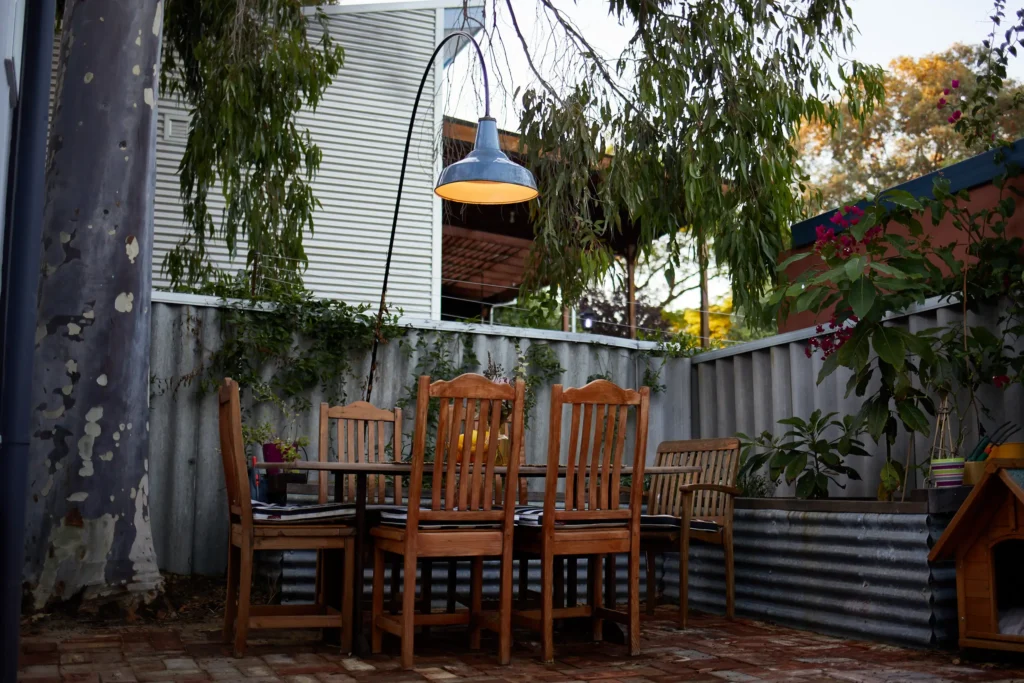
One Old Warehouse Light, and Nothing Across the Sky
A Fremantle client wanted something with more character over his outdoor table, and the sky above his courtyard left clear. We sourced and recycled…
View project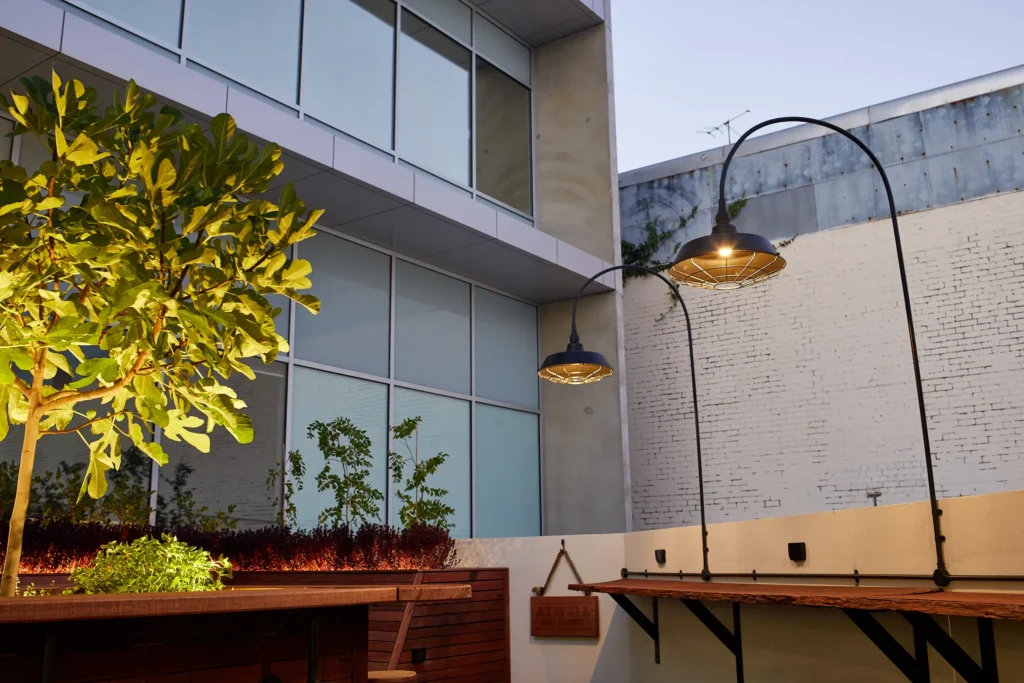
Lighting Designed to Move With the Wind
The businesses of Atwell Arcade in Fremantle were building a timber bar in their shared courtyard. We designed and installed the lighting, taking the…
View project
Commercial LED Lighting Upgrade
Osborne ParkReplacing failing fluorescent lighting across an office and warehouse tenancy with LED, staged around trading so the business kept operating.
View projectFrequently Asked Questions.
Can't find the Answer? Reach out to us and we will be happy to answer any of your questions
Why does my business signage look dim at night even though there are lights on it?
Usually because the light is not landing on the sign. Standard symmetrical floodlights throw most of their output past the building rather than onto it, and uneven coverage makes the dark sections read as black no matter how bright the hot spots are. The fix is normally about optics, positioning and spacing rather than more wattage.
What is an asymmetric floodlight?
Can signage floodlighting cause glare for passing traffic?
Will LED signage lighting be expensive to run?
Do I need approval to light my business signage?
Need a Sparky? Lets Go!
Fill in the form or give us a call on the details below and we will arrange a booking