




Power to a Third Lot in Warwick A 70 Metre Trench and Three Days
The rear lot of a three lot subdivision in Warwick had no power and no easy route to it. We handled the Western Power side, ran 70 metres of underground supply past two occupied lots and a row of verge trees, and had the site live in three days.

Subdividing a block in Perth looks simple on the plan. Three lots where there used to be one, each with its own title, each with its own driveway. What the plan does not show you is where the electricity comes from.
The front lots are usually straightforward. They face the street, the supply is close, and the connection is short. The lot at the back is a different problem entirely. It sits seventy metres from the nearest point of supply with the other two lots in between, and the only way to get power to it is to dig.
That was this job, in Warwick.
What we walked into
The owner had subdivided a Warwick block into three. The two front lots were built and occupied. The rear lot existed on paper and the build was ready to move, but there was no supply to it. Everything that comes after, the slab, the trades, the temporary power the builder needs to actually work, was waiting on that one item.
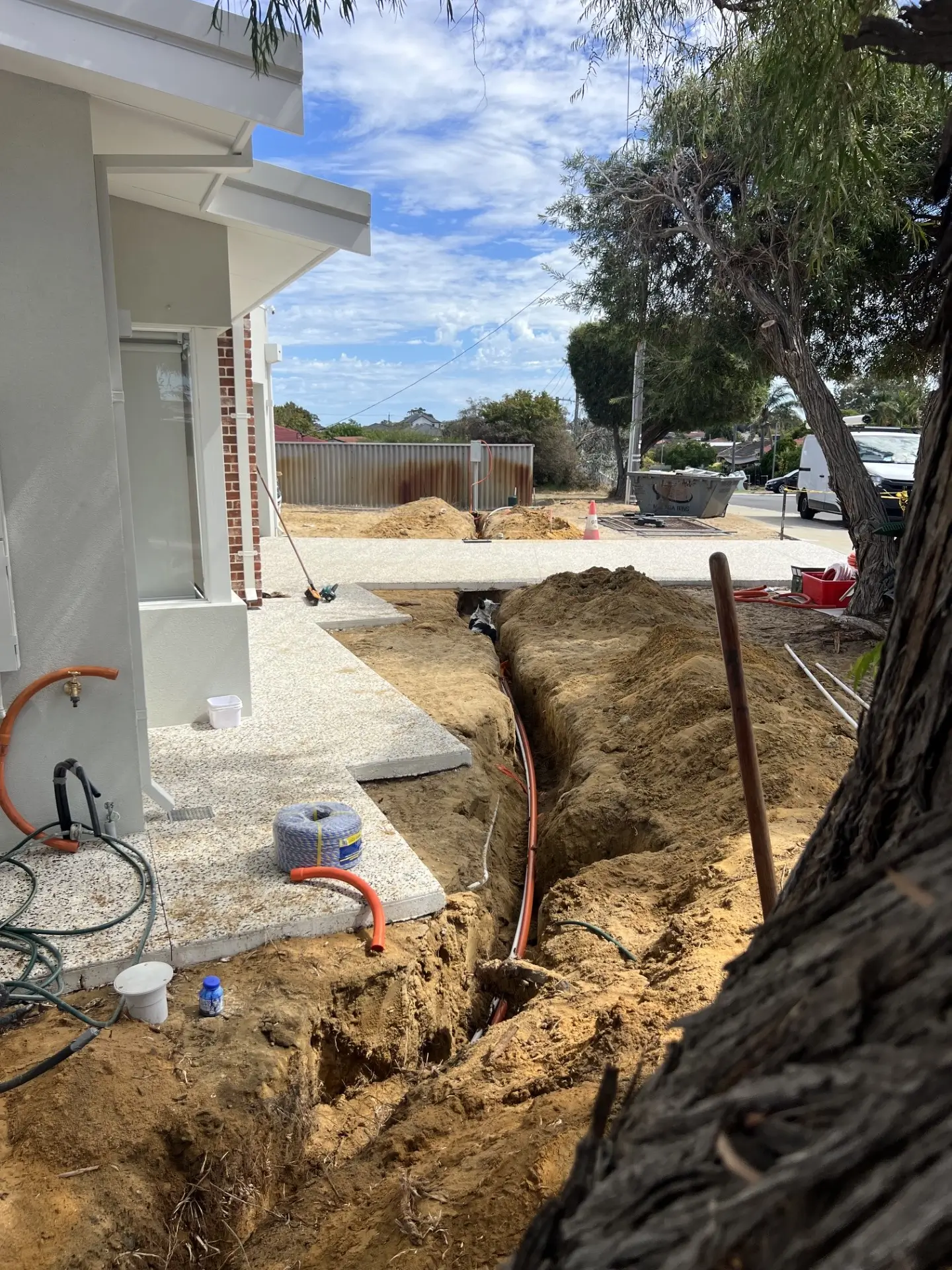
The route was the whole problem. Seventy metres is not a difficult length of cable in itself. Seventy metres that has to run the full length of two occupied lots, cross finished driveways and concrete, and thread past a line of established verge trees is a different job. Every one of those things is a decision that has to be made before the shovel goes in, not while you are standing in the hole.
Three things shaped how we approached it.
- Access. The two front lots were part of the same subdivision, but that did not mean we could simply dig across them and walk away for a week. People were living there. Vehicles, trades, deliveries and the residents themselves all needed a way through, every day, while there was an open trench running the length of the property. That is a planning problem before it is a digging problem.
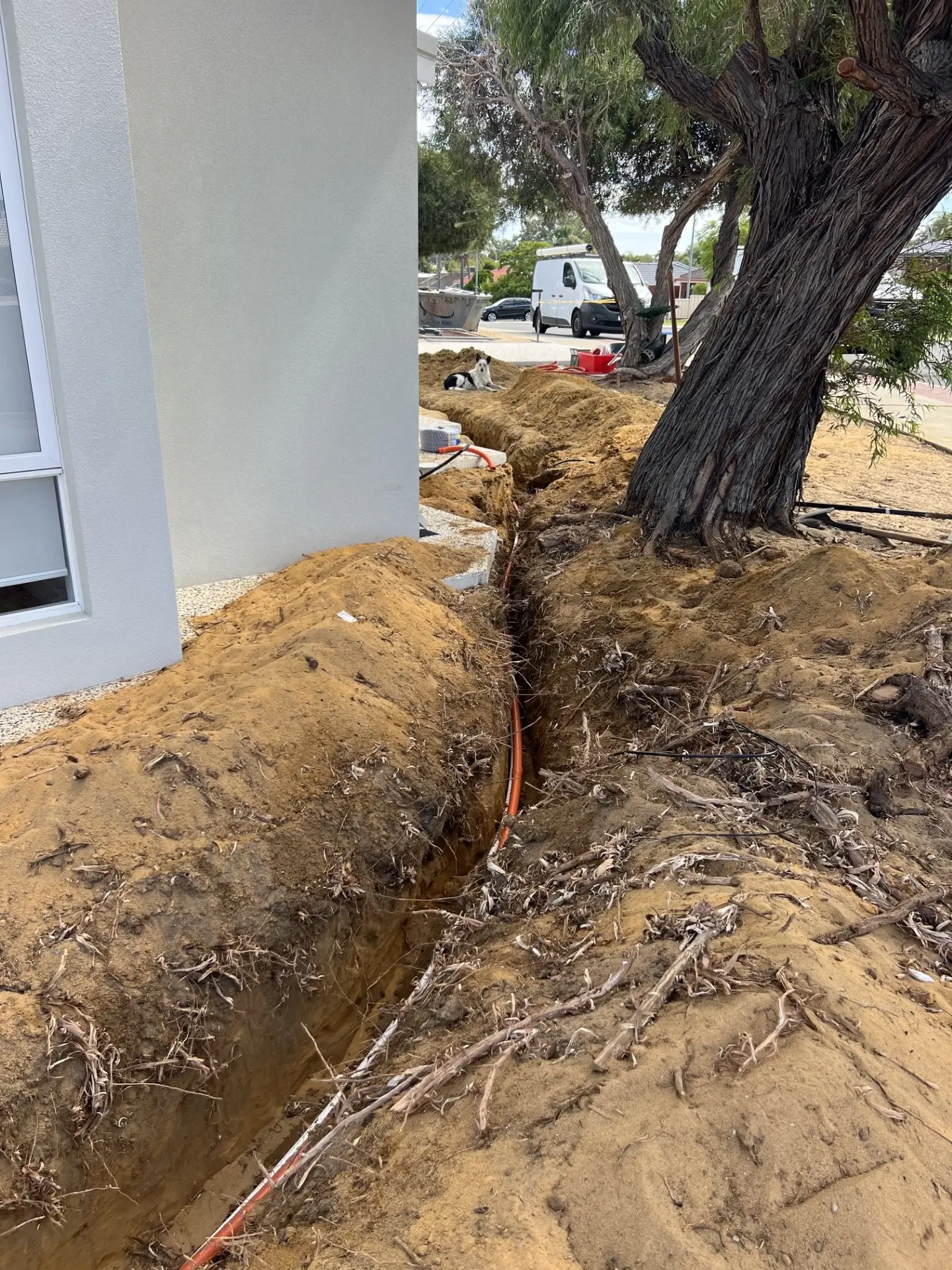
- The trees. The verge trees were mature and they were staying. Established root systems do not move for a conduit and they should not have to. Getting a trench past them means working around the roots rather than through them, which is slower, more careful, and largely done by hand.
- Everything already finished. Sections of the route crossed concrete and paving that had already been laid. Those are the parts you cannot rush, because a bad reinstatement is the thing the client looks at every single day afterwards.
The paperwork, which we handled
The part owners tend to underestimate on a job like this is not the digging. It is the network connection.
Getting supply to a newly created lot means dealing with Western Power: the application, the requirements that come back, and the phone calls in between. It is not difficult work but it is unfamiliar work, and an owner doing it for the first time is learning a process they will use exactly once.
We took care of all of it. The applications, the liaison and the follow-up calls were handled by us from start to finish, so the owner had one point of contact for the whole job rather than a trench crew on one side and a network process on the other. That is generally the right way round. The people digging the trench are the people who know what the connection requires.
What we did
We set the route out first, walked it end to end, and identified every point where the trench met something that mattered: a driveway, a services crossing, a tree, a boundary, a spot where somebody needed to get across. Working that out on paper costs an hour. Working it out mid-trench costs a day.
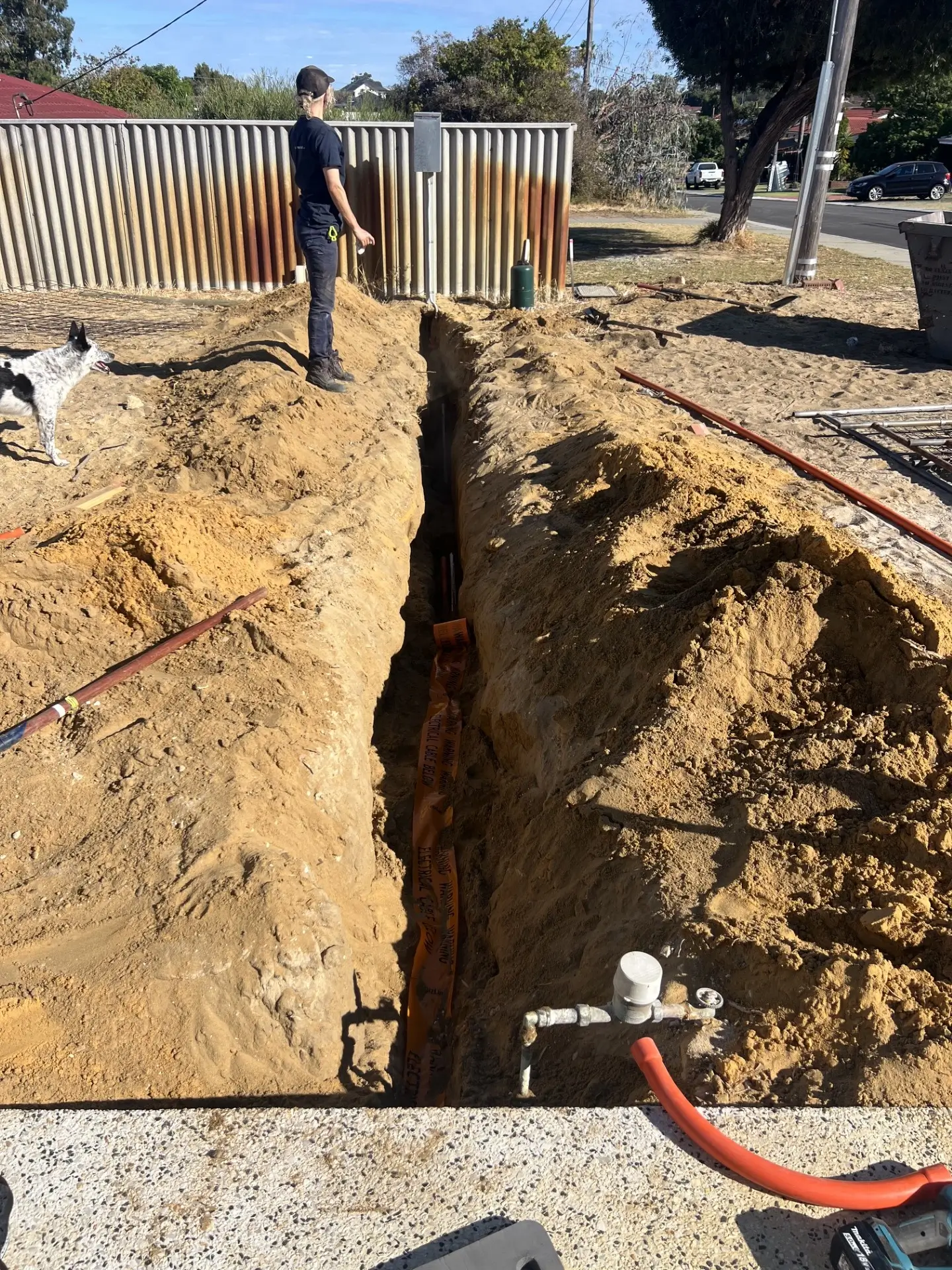
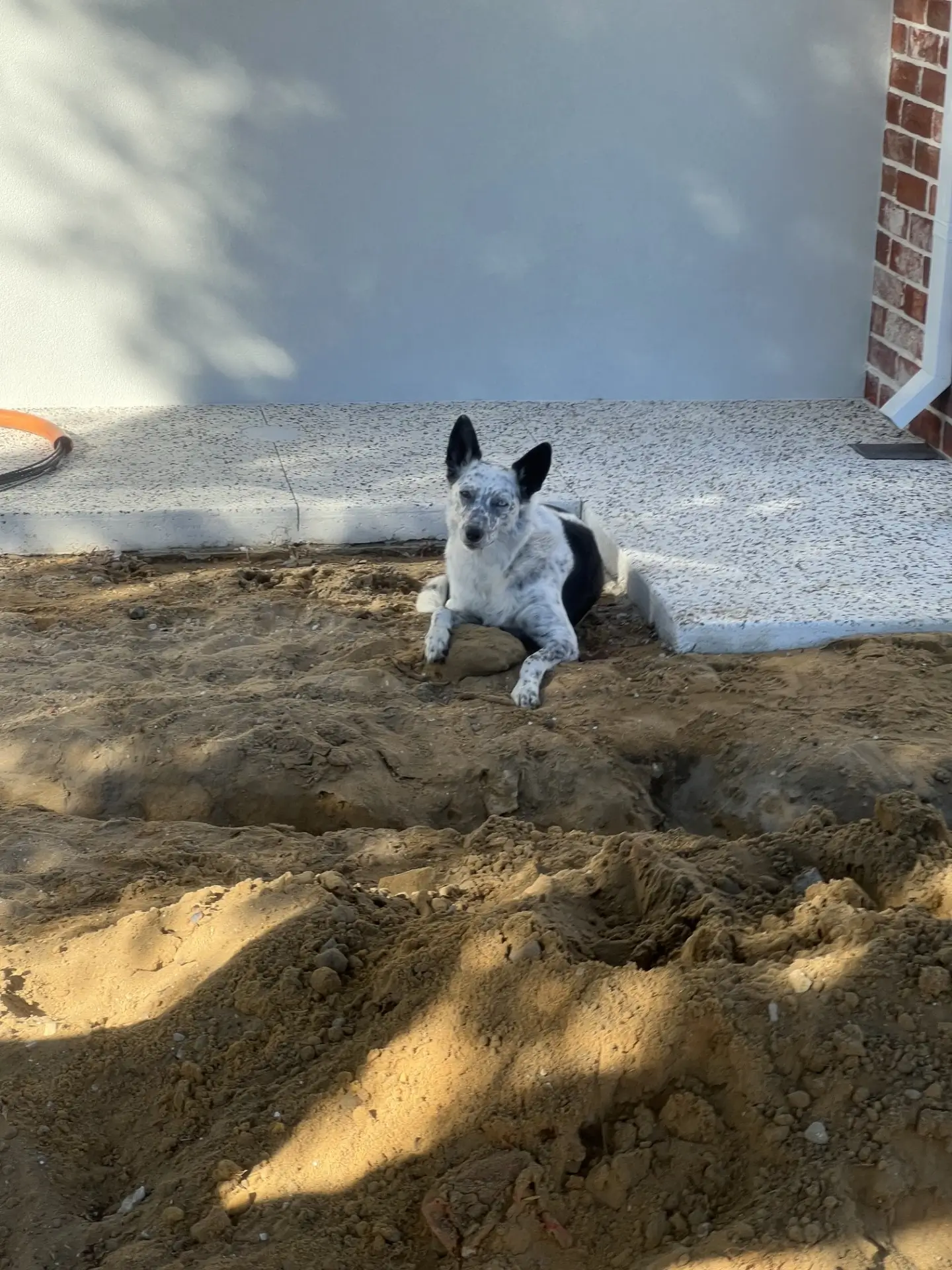
Then we dug, to the depth the Wiring Rules require for the ground being crossed. Machine where it was open and there was nothing to damage, hand-dug where it counted, through the root zone of the verge trees and anywhere we were working close to existing services. Perth sand digs quickly, which helps, but it also means trench walls need managing and the site needs to be left safe overnight. The trench was fenced and coned for the duration, crossing points kept clear, and the sections nearest the driveways closed up first so nobody was locked in or out.
Where the run had to cross concrete, we went under rather than through it. The paths and the crossover were left intact.
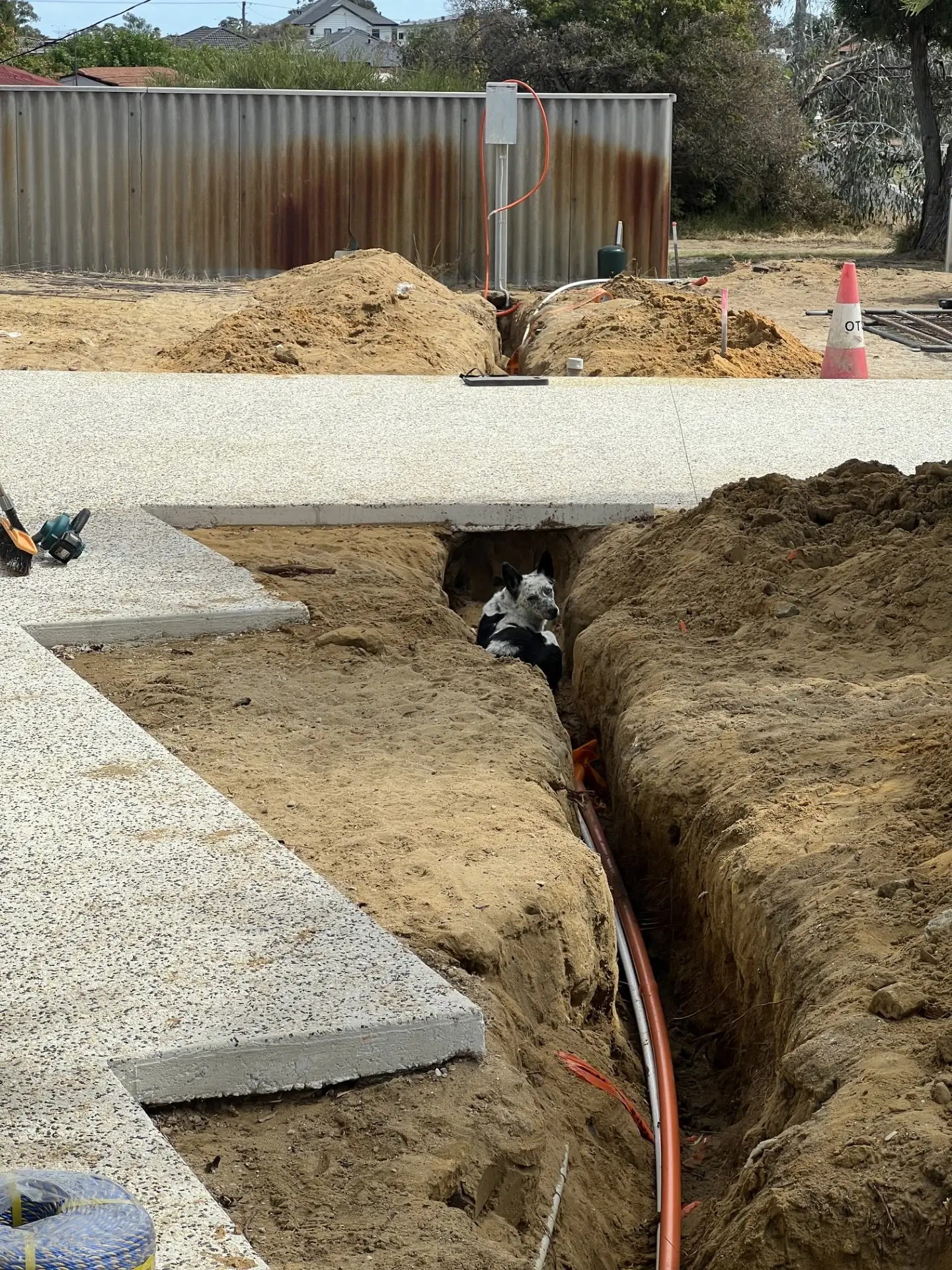
Conduit went in continuous along the run, with sweeping bends rather than tight ones at every change of direction. A gentle radius is what lets the cable be pulled through in one go, and what lets it be pulled out again years from now if it ever needs to be. Draw wire in every length. Ends capped so the trench does not fill them with sand overnight.
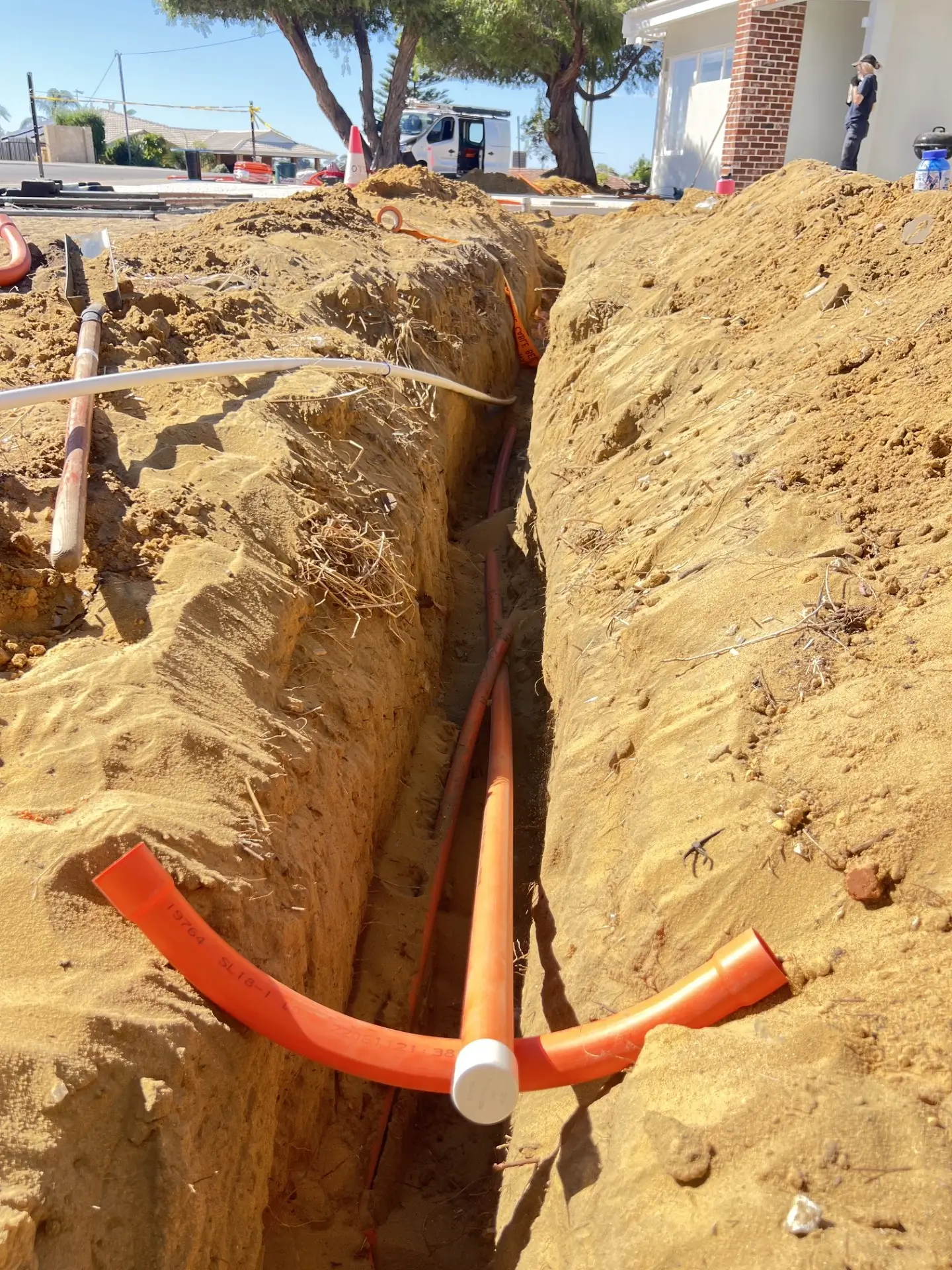
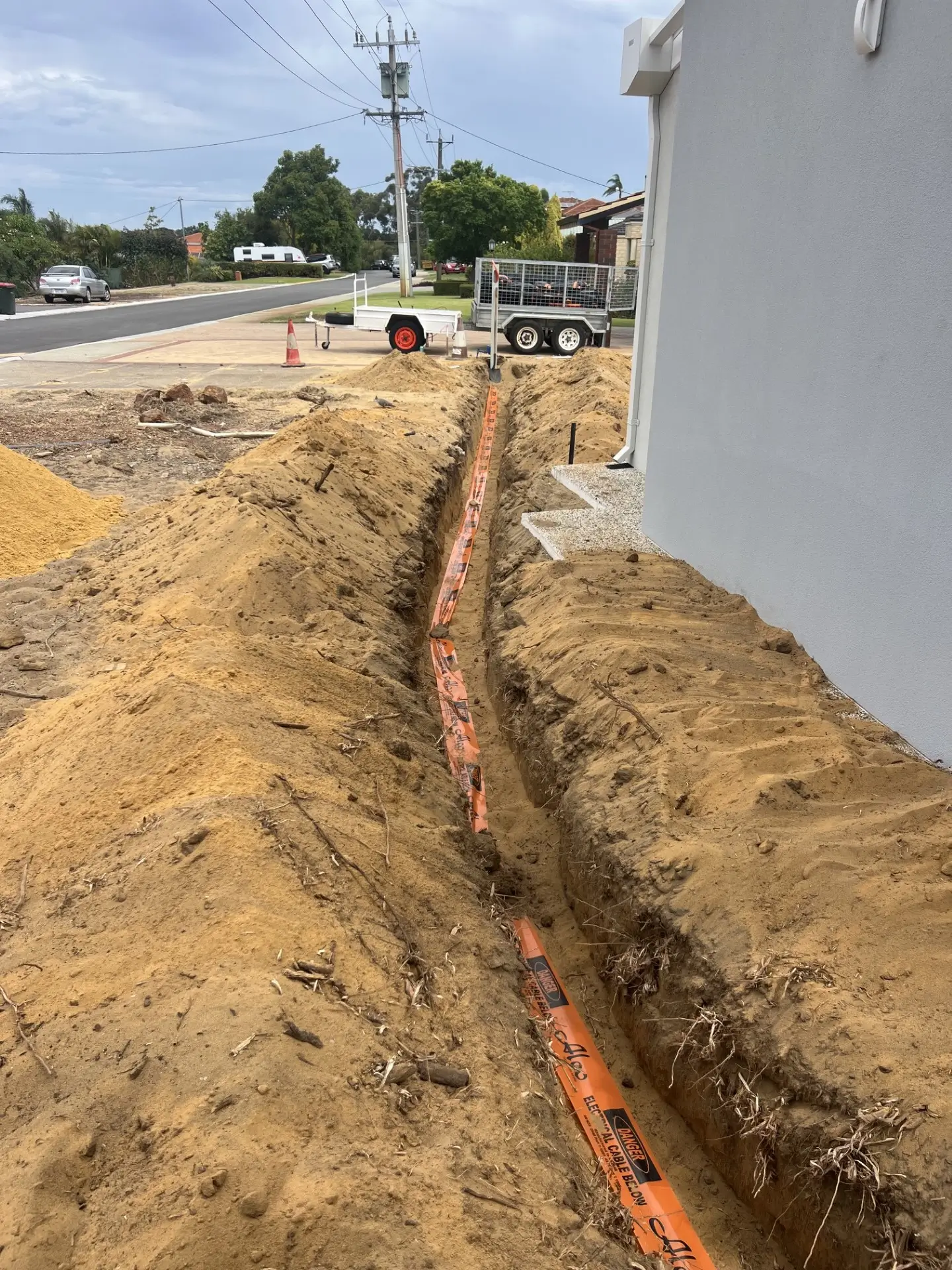
Marker tape went in above the conduit along the full length before backfill, the orange DANGER ELECTRICAL CABLE BELOW tape you can see in the photos. It is a small item on a materials list and it is the single thing most likely to stop somebody putting an excavator bucket through this cable in ten years. Then bedding, backfill, compaction, and reinstatement of the surfaces we had opened.
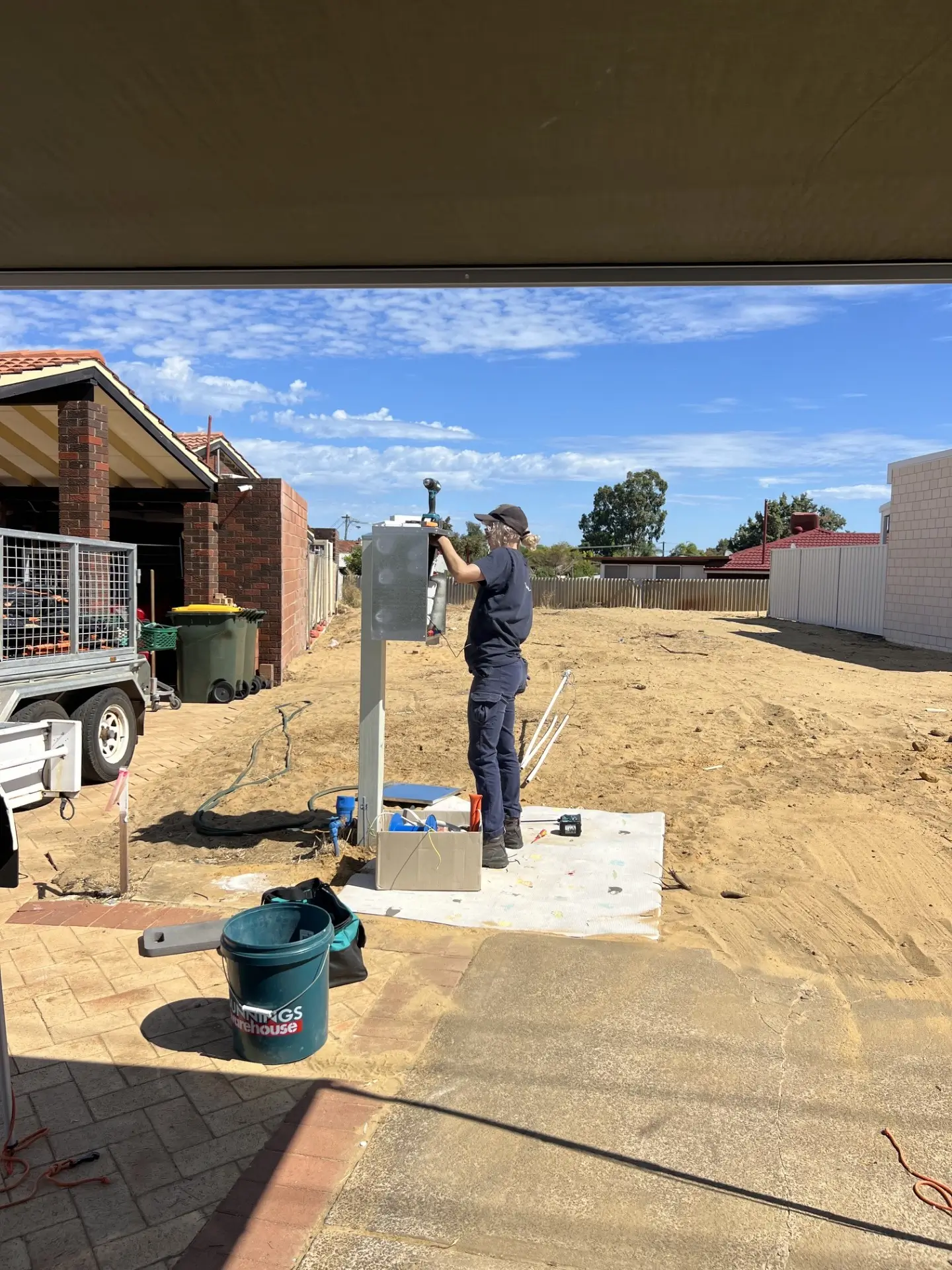
At the lot end, the metering position was set and fitted off ready for the supply, and the connection was made and tested.
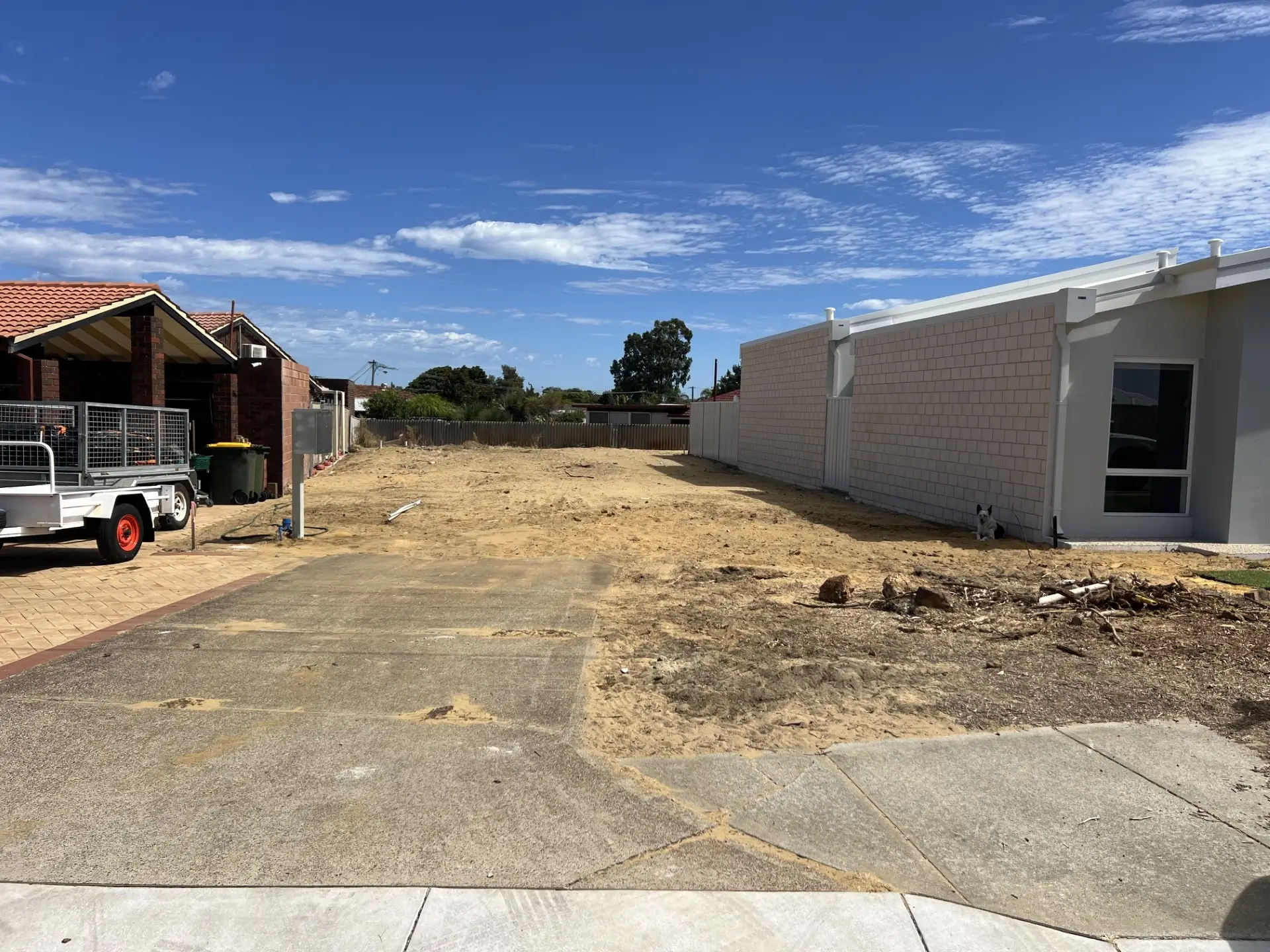
Three days, start to finish. The front lots had their frontage back, and the build carried on.
Like every job, it came with an Electrical Safety Certificate for the work carried out.
The part worth knowing if you are subdividing
If you are subdividing a block, or buying a rear lot on one, the electrical supply is worth thinking about a lot earlier than most people think about it.
- Ask where the power is actually coming from before you commit to a build program. A rear lot’s supply route is not a detail to be sorted out later. It determines cost, it determines how long the site is disrupted, and on a tight program it can hold up everything behind it.
- The length of the run is rarely the expensive part. What the run has to cross is. Seventy metres of open sand is a straightforward day. Seventy metres crossing two occupied lots, a concrete crossover and a row of verge trees, with access to be kept open the whole time, is a job that needs planning and a lot of hand digging. Two jobs with identical cable lengths can be very different jobs.
- Ask who is doing the Western Power side. It is a real part of the job and somebody has to own it. If your electrician does not handle the application and the liaison, that work lands on you.
- Get the route walked before the concrete goes down. By far the cheapest version of this work is the one where the trench is dug while the site is still open. If the paving, the crossover and the landscaping are already in, you are paying to open them up and put them back.
- Trees usually stay. Verge trees are generally the local council’s, and mature trees on the block are often worth keeping regardless. Plan the route around them and accept that section will be dug by hand.
- The paperwork is part of the job. Where the work is notifiable, a preliminary notice goes in before it starts and a notice of completion is lodged after. An Electrical Safety Certificate is issued to the person the work was done for within 28 days of completion. That certificate is the record that the work was done by a licensed contractor and tested. Worth holding on to, and worth asking for if you have not been given one.
Project gallery
Similar projects
One Old Warehouse Light, and Nothing Across the Sky
A Fremantle client wanted something with more character over his outdoor table, and the sky above his courtyard left clear. We sourced and recycled…
View project
Switchboard Upgrade and RCD Compliance
BayswaterReplacing an original rewireable fuse board with a modern switchboard, bringing the property up to the RCD protection required before settlement.
View project
Kitchen Renovation Electrical Work
Mount HawthornFull electrical rough-in and fit-off for a kitchen renovation, including a dedicated induction cooktop circuit and a switchboard upgrade to carry the new load.
View projectFrequently Asked Questions.
Can't find the Answer? Reach out to us and we will be happy to answer any of your questions
How is power connected to a rear lot on a subdivision?
Usually with an underground supply run from the nearest available point to the new lot’s metering position. On a rear lot that can mean a long trench running the full length of the lots in front of it, as it did on this Warwick job. The route, the surfaces it crosses and the obstacles along it drive most of the cost and most of the time.
Who handles the Western Power application for a new lot?
How long does it take to get power to a subdivided lot?
Can a trench be dug near verge trees?
What happens to access while the trench is open?
When should I talk to an electrician about a subdivision?
Need a Sparky? Lets Go!
Fill in the form or give us a call on the details below and we will arrange a booking